Wednesday, February 27, 2019

Unit 10: Preparation for Progression

Context:

We were given our assignment for Unit 10 for which we have to plan and prepare for what we have to do after we graduate college. I would personally like to go to drama school in order to do a degree in technical theatre. In the future, I would like to have a career in lighting.

Research 

I have decided to stay in the UK instead of going abroad because it is the country that has the best drama schools in the world therefore it is where I will get the best training possible.

I have looked into the following drama schools: Mountview, Royal Central School of Speech & Drama, Liverpool Institute for Performing Arts, RADA, Guildhall, LAMDA, Royal Conservatoire of Scotland and Rose Bruford College. I have attended open days at these institutions in order to get an idea of what the facilities are like and to meet the tutors and ask them about the course and facilities and I have rather impressed with them which is why I have applied to these drama schools.

They all have industry standard facilities which will allow me to learn and practice on the equipment that I will be using in the actual industry. They also offer courses that will give me the skills which will make me more employable on big shows in the West End, Broadway and shows such as the Edinburgh Military Tattoo which is where I aspire to work.

Rose Bruford College and The Royal Central School of Speech & Drama both offer courses that are specialist meaning that I would be able to focus on lighting from the start. All of the other institutions run courses where the students have to learn a little bit about each department then they provide the opportunity to specialise in any department of choice. I would specialise in lighting as I wish to pursue a career in lighting.

RADA and LAMDA both run courses where you start by doing a two year foundation course and then you can apply to do a third top-up year where you would get a BA degree.

I am attracted to these institutions also because of how prestigious they are and how good their training is.

Planning:


I have applied to all of these drama schools and they have all offered me an interview. I have an interview at Guildhall on Thursday 28th February, the Royal Conservatoire of Scotland on Tuesday 19th March and LAMDA on Thursday 4th April. 

I have already interviewed at Mountview, Rose Bruford College, RADA,  Royal Central School of Speech & Drama and LIPA. I have not yet had a response from RADA or LIPA. The Royal Central School of Speech & Drama have rejected me but I have been offered a place at Mountview and Rose Bruford College.

Problem-Solving:

Once I have interviewed everywhere and had responses from all the drama schools, I will have to decide which offer to accept. I would like to go to either RADA or Guildhall as they are the most prestigious of all my choices.

I will decide what drama school to go to based on the prestige of the institution, the course content (whether or not I feel if the course is right for me) and location (is the student life around the drama school good or not).

Wednesday, February 13, 2019

Unit 11 Final Version

Here is the final version of my Unit 11 dissertation

Eco-Design Working Plan 2016-2019
What effect is it going to have on theatres?


Due to energy inefficient electrical appliances, the EU is continuously pushing for those appliances to become as efficient as they can in order to decrease their carbon footprint. In 2012, the EU released a set of efficiency requirements which targeted lights, forcing office and domestically used lights to be replaced with LEDs. However, in their regulation document, the EU outlined that theatre lights were exempt from the requirements as they were classed as ‘special purpose products’ (European Union, 2012). Theatre lights were able and will be able to continue to be used as normal until September 2020 as the European Commission have published a new working plan which bans all tungsten lights in the entertainment industry.

Incandescent lights have been used for several decades to light shows. Without them, we would be greatly limited in terms of what we could do to set the mood, weather and time of day. On the other hand, tungsten lamps are incredibly energy inefficient, 80% of the energy used by tungsten lamps is wasted as heat meaning that theatres leave a massive carbon footprint. This is why the European Commission is putting forward a new legislation which will ban all tungsten lamps and force all theatres to replace their current lighting fixtures with LEDs. The European Commission have named the new legislation ‘Eco-Design Working Plan 2016-2019’ (Association of Lighting Designers, 2018).

If the EU’s efficiency requirement of ’85 lumens per Watt’ (Association of Lighting Designers, 2018) is implemented, then all of the theatres would struggle to comply with the regulation as it would be costly to replace entire lighting rigs with LED fixtures that meet the European Commission’s requirement, especially as individual LED luminaires are incredibly expensive. It may even be costlier than just buying LEDs and rigging them up. Chances are that you will have to invest money in changing the whole lighting system as LEDs don’t work in the same way that generics do (Town, 2018). The sheer cost of replacing entire lighting rigs would cause several smaller venues to shut down.

Another concern is that there isn’t an LED unit which is an adequate replacement for the generics as they lack the dimming capabilities and warmth that is offered by tungsten lights. Performances will simply look completely different; designers will not be able to create the same moods as they would with tungsten due to the difference in the colour temperature. Scenes that intend to portray tenderness or compassion will be incredibly difficult to achieve because of the lack of Kelvin. You’re also able to set the incandescent lights at lower intensities which allows you to set different moods, weather and times of day.

Worse still, the LEDs that are currently being incorporated more and more often into lighting designs, are significantly more efficient than tungsten lights, yet they still don’t meet the efficiency requirement and LED manufacturers don’t think that it will be possible to create an LED unit which will meet both the ‘optical and performance design’ (Association of Lighting Designers, 2018) and efficiency requirements by September 2020. This would leave lighting designers with poor quality lights that wouldn’t be able to produce lighting states at the same sort of standard which will severely damage the quality of shows.

On the other hand, there are a few advantages of using LEDs. They radiate significantly less heat which increases the safety of handling them. It also means that the environment in which you are working may be more comfortable as it is not being heated up as much. You don’t need to spend time replacing lamps as you do with generics which may gain you some crucial time during tech week. Another benefit of using LEDs is that you don’t need to spend time testing and cutting out gels as LEDs come with a built-in colour palette which allows you to mix the primary colours by adjusting the intensity of each colour (Prestige LED Lighting, 2014).

In my experience, most theatres and lighting designers prefer the conventional lights as you’re able to use a wider variety of effects with them then you can with LEDs, even if you need to spend more time maintaining the incandescent fixtures or fitting them with gels.

In conclusion, the Eco-Design Working Plan 2016-2019 will have negative effects on theatres as it will be costly to replace the lighting rigs with LED luminaires. The incredibly high cost of such an operation will force several venues to shut down as they simply don’t have the budget to do such a thing. The LED lights that are currently available to us are not an adequate replacement for the conventional units as they are unable to do the things that we need them to do; from dimming to low intensities to producing warm light, LEDs just haven’t yet been developed to that point.

The EU have good intentions in trying to reduce the carbon footprint that is left by theatres but they are going about it with the wrong approach. They are forcing theatres to do the impossible and by doing so they are crippling the entertainment industry.


Reference:

European Union (2012) Regulations. Available at: https://eur-lex.europa.eu/LexUriServ/LexUriServ.do?uri=OJ:L:2012:342:0001:0022:EN:PDF (Accessed: 12th February 2019)

Association of Lighting Designers (2018) The Proposed EU 2020 Lighting Regulations and their Potential Impact on Performance Lighting.  Available at: https://www.ald.org.uk/sites/default/files/resources/ALD_EULighting2020BriefingDoc20Apr18.pdf (Accessed: 12th February 2019)

Town (2018) #SaveStageLighting to Save Europe’s Theatres. Available at https://uktheatre.org/who-we-are-what-we-do/uk-theatre-blog/save-stage-lighting/ (Accessed: 12th February 2019)

Prestige of LED Lighting (2014) Benefits of LED. Available at: https://www.prestigeledlighting.com/v/benefits-of-led/19 (Accessed: 12th February 2019)


Unit 11 Proposal

Context:

For our Unit 11, we have to write a dissertation about a specialist study. My dissertation is about the new EU Legislation which has been named the Eco-Design Working Plan 2016-2019. I will talk about what the legislation is and what effect it is going to have on theatres.


Research:

In order to be able to write about the topic in detail and form an argument that will outline the pros and cons about the legislation, I will read the information that is available on the following links.


https://www.eesc.europa.eu/en/our-work/opinions-information-reports/opinions/ecodesign-working-plan-2016-2019

http://ecostandard.org/ecodesign-working-plan-2016-2019-finally-released/

https://www.ald.org.uk/resources/the-proposed-2020-eu-lighting-regulations-a-primer

https://www.standard.co.uk/news/uk/new-eu-lighting-rules-would-be-devastating-to-the-uks-entertainment-industry-a3830201.html

https://www.thestage.co.uk/news/2018/eu-lighting-rule-will-cost-uk-theatres-1bn/

https://www.ald.org.uk/resources/ald-eu-lighting2020-briefing-document

http://ecostandard.org/ecodesign-working-plan-2016-2019-finally-released/.

https://www.theguardian.com/stage/2018/apr/29/eu-rule-could-leave-theatres-dark

https://etalia.net/world/new-eu-rule-may-lights-acts-like-beyonce-sam-smith-liter/

https://eur-lex.europa.eu/LexUriServ/LexUriServ.do?uri=OJ:L:2012:342:0001:0022:EN:PDF

https://www.ald.org.uk/sites/default/files/resources/ALD_EULighting2020BriefingDoc20Apr18.pdf

https://www.plasa.org/technical/eu-changes-to-lighting-regulations/

https://www.prestigeledlighting.com/v/benefits-of-led/19


Planning:

I will use the following plan to write my essay.

Introduction:

What is the EU Legislation?
Why was it put on theatres?

Main Body of Dissertation:

The effect that the Legislation is going to have on theatres


Conclusion


Monday, January 21, 2019

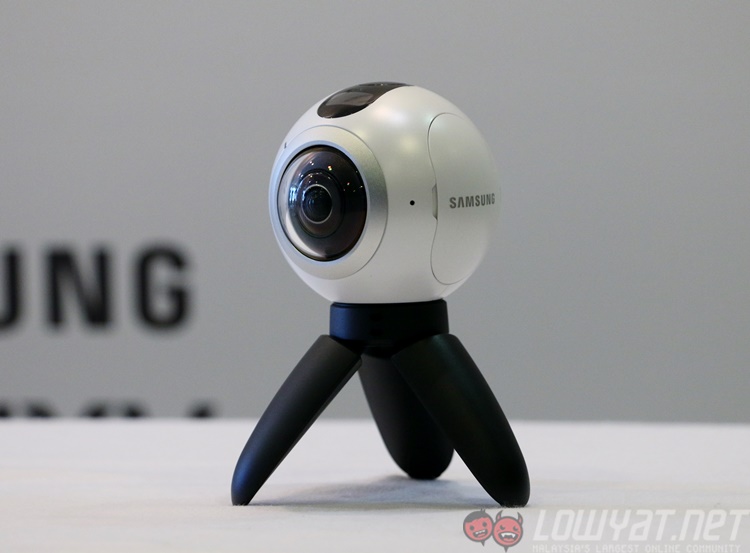
Testing the 360 Camera

We were introduced to the 360 cameras that we would be using to film a 360 VR tour. We were asked to get pictures and videos of anything we wanted; our only criteria was to be creative. We came up with the idea of hiring Boris bikes and attaching the cameras on the bikes so that we could film ourselves cycling around.

After about 25-30 minutes, we uploaded our videos and pictures onto a computer and by using Premiere Pro, we edited and added effects to them. One effect that we used was a mirror effect where the videos which we had 'reflected' off of themselves so we would be able to see the footage on one side of the screen and on the side of the screen we could see the same thing but in reverse.

Romeo & Juliet Posters

In order to get some ideas for my poster for the Royal Opera House Design Challenge, I have put together a mood board of posters in order to get some inspiration.

Tuesday, January 15, 2019

My Interview at Mountview

Mountview were they first institution to have invited me in for an interview. On the day of the interview, they talked us through what the course consisted of, they then gave us a tour of the building to show us the facilities and because they have recently moved from Wood Green to Peckham some parts of the building were still being built. They gave us the opportunity to ask them questions throughout the day.

Lastly they interviewed everyone individually. At the end of the interview they informed me that they would let me know as to whether or not they would offer me a place the next day. The following day, they emailed me to offer me a place. They also said that they would send me the necessary paperwork at some point in January so that I would be able to accept the offer. The paperwork would also include the method that I shall use to fund the course (tuition fees and maintenance costs).

The interview lasted around 20 minutes. During the interview, they asked me about my previous experience, where I see myself in few years after graduating and my biggest achievement in terms of lighting. They also looked at and discussed my portfolio.

In order to be better prepared for the next interview, I feel like I need to be clearer with my answers by speaking more clearly and provide clear-cut explanations. I also need be a little more relaxed as I was very tense and nervous.

Should I decide not to go university for any reason at all, I would go into the world of work to get experience and build up my CV and portfolio.

Friday, January 11, 2019

UCAS Personal Statement


This is the personal statement which I used on my UCAS application:

I love the buzz of live theatre. I like the idea of hard work building up to something tangible and then it’s show time. There’s the hush when the lights go down, the thrill as applause rings out, and keeping on your toes in between!
I am a member of the National Youth Theatre, having come through a highly competitive selection process to win a place at the NYT’s Backstage Course (Lighting) in the summer of 2018.
This gave me a deeper knowledge of the subject and a big boost to my confidence. The course was a steep learning curve, combining classroom teaching with hands-on experience in lighting live performances. The show I worked on was performed in the round so I learned about the difficulties of lighting a performance in this type of space compared with a traditional end-on theatre. I also gained a better understanding of how integrated all of the theatre departments are and how they work together.
Ever since I saw Mary Poppins float above the audience with her umbrella, I have been captivated by technical theatre and wanted to get involved. I won the award for best stagehand at my school’s musical productions and became lighting technician for my GCSE drama practical exam.
Now I am studying for a UAL Level 3 Extended Diploma in Production Arts, with a particular interest in lighting.
I have been technical director for a college production of Frankenstein where I worked with the director to create and program the lighting cues. I also operated the lights for four performances. Last term, I was board operator for A Christmas Carol.
At a weekend workshop I saw what lighting designers have to think about when designing a rig, for example how light may spill when lighting someone, how colours are used, how shadows are created and how those might affect the intended mood or setting.
Passion, regret, sadness: emotions that can be portrayed with carefully selected gels and well-thought out focusing of the lights. With technology that is constantly evolving, lighting is a discipline that never fails to captivate me.
That is why I want to pursue a career in stage lighting, first as a lighting programmer and operator, and later as a lighting designer. For now, it’s about learning to materialise the designer’s creative ideas, to manipulate the lights in such a way that makes the audience shed a tear or fills them with delight.
The next step is to become an expert in lighting and to maximise my opportunities in theatre by taking my education to the next level. I am looking for a course that offers a high quality degree with an emphasis on practical training and hands-on experience. My main area of interest is lighting but other areas of study could help towards a broader understanding of technical theatre.
In the longer term, I see myself working on big shows in the West End or at the Royal Opera House, or perhaps outdoor shows like the Edinburgh Tattoo or Glastonbury.
I like to travel and am fluent in French. If I do not remain in London, I could see myself taking my skills to Broadway, Cirque du Soleil or on tour.
The camaraderie of the team means a lot to me. I would be a great addition to any student cohort because I am friendly, enthusiastic and eager to learn. I have always been a good team member.

Royal Opera House Design Challenge

For the Royal Opera House Design Challenge I have decided to do Marketing Strategy and Design. My idea is to do a virtual tour of the Royal ...